
How We Worship
Worship Shaped by the Gospel
Christian worship is not something we create for God; it is something God creates in us. Each Sunday the Lord gathers us to meet Him, to be renewed by His grace, and to be sent out in love for the world. Our worship follows the pattern of the gospel itself—God calls, cleanses, consecrates, communes with, and commissions His people. Every element is meant to draw us deeper into the life of Christ.
We seek worship that is:
Scriptural – formed by the story and language of the Bible
Trinitarian – directed to the Father, through the Son, in the power of the Holy Spirit
Participatory – the work of the whole congregation, not a performance to be observed
Formative – shaping our loves and habits into the likeness of Christ
Reverent and joyful – marked by awe before God’s holiness and gratitude for His mercy
Ecumenical and traditioned – recognizable to Christians across the ages and around the world
Sacramental – communing with Christ through Word and Table
Missional – sending us to serve our neighbors in Jesus’ name
These convictions guide everything we do when we gather on the Lord’s Day.
Word and Table
Our service moves through a historic rhythm shared by much of the Christian family, reflecting the traditional two-part structure of the liturgy of the Word and the liturgy of the Table.
During the liturgy of the Word, we are called by God to worship, we confess our sins, listen to readings from both the Old and New Testaments, receive the preaching of the Word, confess the faith of the church, and pray for the church and the world.
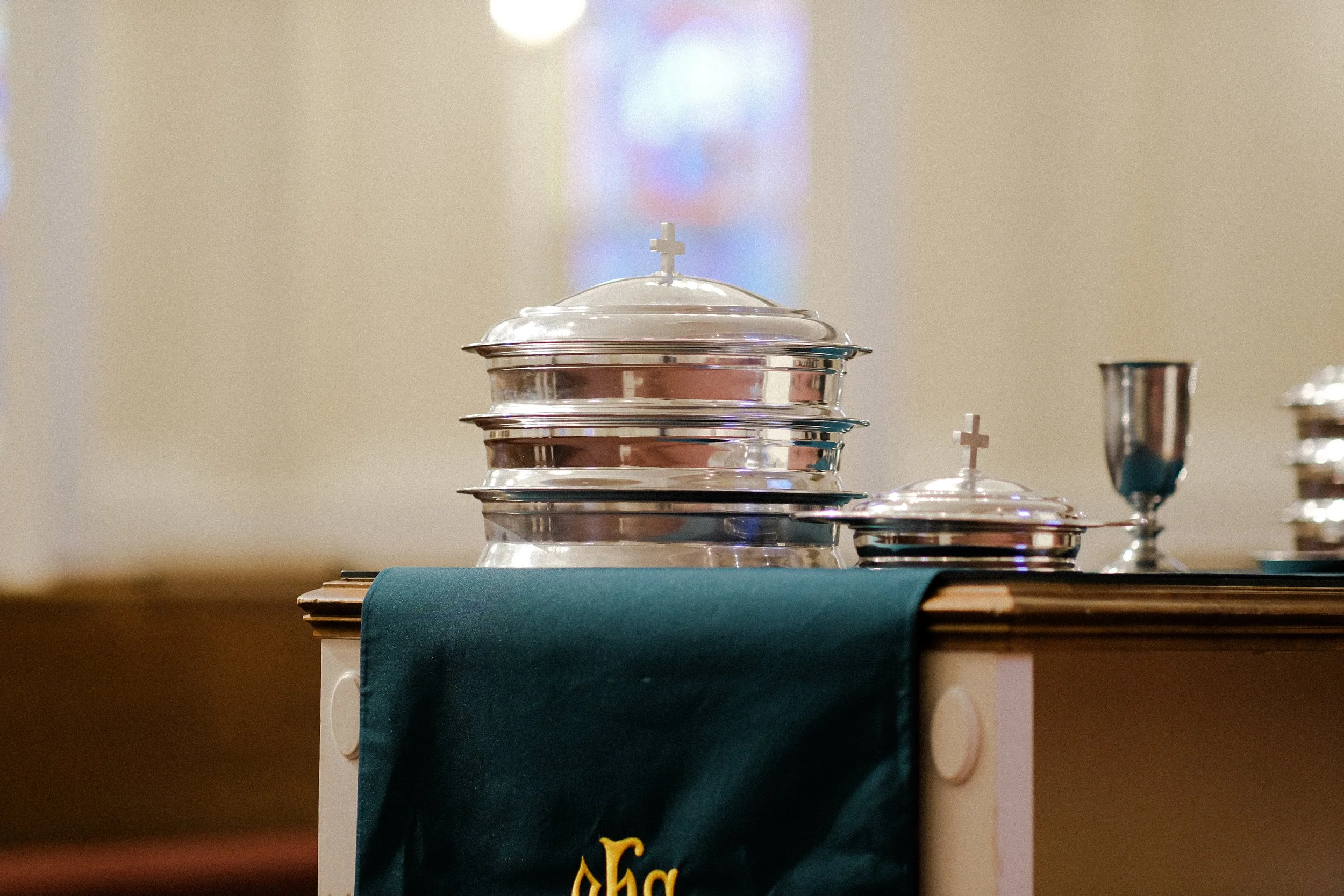
During the liturgy of the Table, we bring our offerings to God, give thanks to Him for the sacrifice of His Son, celebrate Holy Communion, and are sent out into the world with a blessing. This pattern is not new to us; it reflects the shape of worship practiced by the church for centuries and across various traditions.
A typical order of worship includes the following:
Silence
Call to Worship
Prayer of Adoration
Hymns of Praise
Confession of Sin & Assurance of Pardon
Readings from Scripture
Prayer for Illumination
Sermon
Profession of Faith
Prayers of the People
Offering
Invitation to the Table
Prayer of Thanksgiving & Lord’s Prayer
Communion
Hymn of Dismissal
Blessing
Worship as God’s Work in Us
Our basic conviction is that God is the primary agent in our worship. As the 16th-century Reformers of the Church emphasized, worship is a dialogue initiated by God. We acknowledge this in several ways. By beginning in silence and a call to worship, we acknowledge that worship starts with God’s initiative. Through confession and pardon we are reconciled by God and prepared to enter His presence. In the reading and preaching of Scripture the Holy Spirit consecrates us by the Word of truth and we acknowledge our dependence on His work through a prayer for illumination. At the Lord’s Table we give thanks for God’s mighty acts of creation and redemption, remember Christ’s saving work, invoking the blessing of the Spirit, and receiving the bread and cup as signs of His saving presence. Finally, in the blessing and sending, we acknowledge that we are commissioned by God commissions to live as His witnesses in the world.
Our aim is not simply to conduct a meaningful service but to become a people shaped by the gospel. Through intentional repetition—praying, singing, confessing, listening, and coming to the Table week after week—Christ inscribes His life into ours. Worship gathers us as one body and sends us out to love God and neighbor with renewed faith, hope, and love.